

Is carbon fiber better than aluminium? The answer depends on what you’re using it for. In this article, we’ll break down the characteristics of each material, compare them, and figure out which one makes more sense depending on the application.
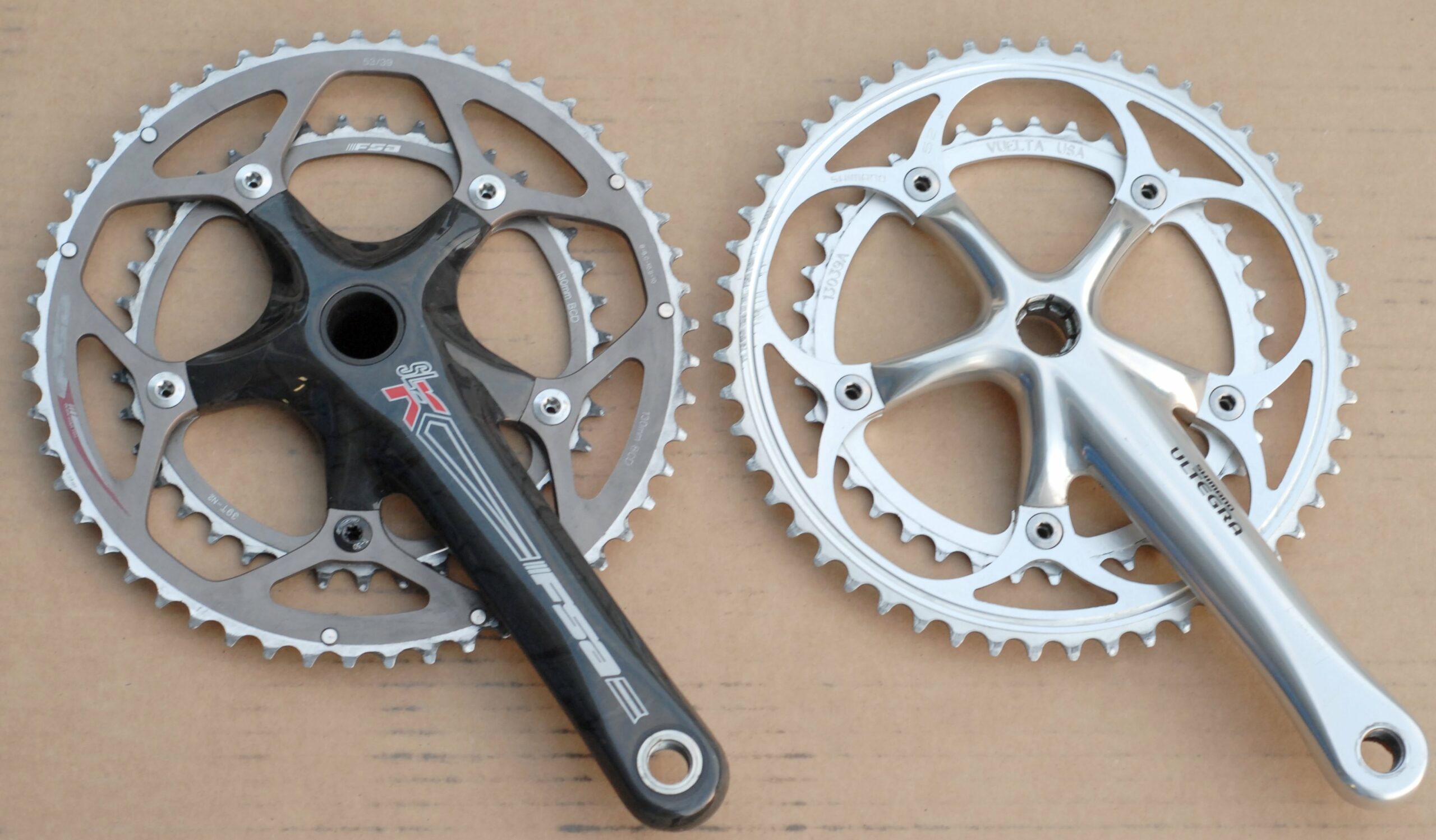
Left: Carbon fibre crankset with 53/39 rings. Right: Aluminium crankset with 53/39 rings. Photo credit: John Rees
Before getting into the comparison, it’s important to clarify that we’ll be using generalizations. There are many different types of aluminium and many types of carbon fiber, each with their own properties. Unless stated otherwise, when we talk about carbon fiber, we mean a composite made of carbon fibers and epoxy resin, and for aluminium, something like 6061 or similar. We’ll focus on the most representative properties of each material to keep the comparison as fair as possible.
Comparison between carbon fiber and aluminium
In the table below, we compare some of the most relevant properties of each material to give a clearer picture of their differences.
| Characteristic | Carbon Fiber | Aluminium |
| Modulus of elasticity | 240 GPa | 69 GPa |
| Density | 1.8g/ cm3 | 2.7g/cm3 |
| Thermal expansion | Normally very low | High |
| Tensile strength | 3.000 MPa | 310 MPa |
| Fatigue resistance | Excellent | Good |
When is carbon fiber clearly superior to aluminium?
As mentioned earlier, it depends on the specific project. But if we simplify, we can say that when strength-to-weight ratio or stiffness-to-weight ratio are critical, carbon fiber is usually the better option.
On top of that, carbon fiber is anisotropic, which makes it especially effective in applications where the main loads are directional. Another key advantage of composites is their resistance to corrosion, while aluminium can experience galvanic corrosion depending on the environment and the materials it’s in contact with.
When is aluminium clearly superior to carbon fiber?
Again, simplifying things, aluminium is the better choice when heat dissipation matters, since it has very high thermal conductivity. It’s also generally easier to scale for large-volume industrial production.
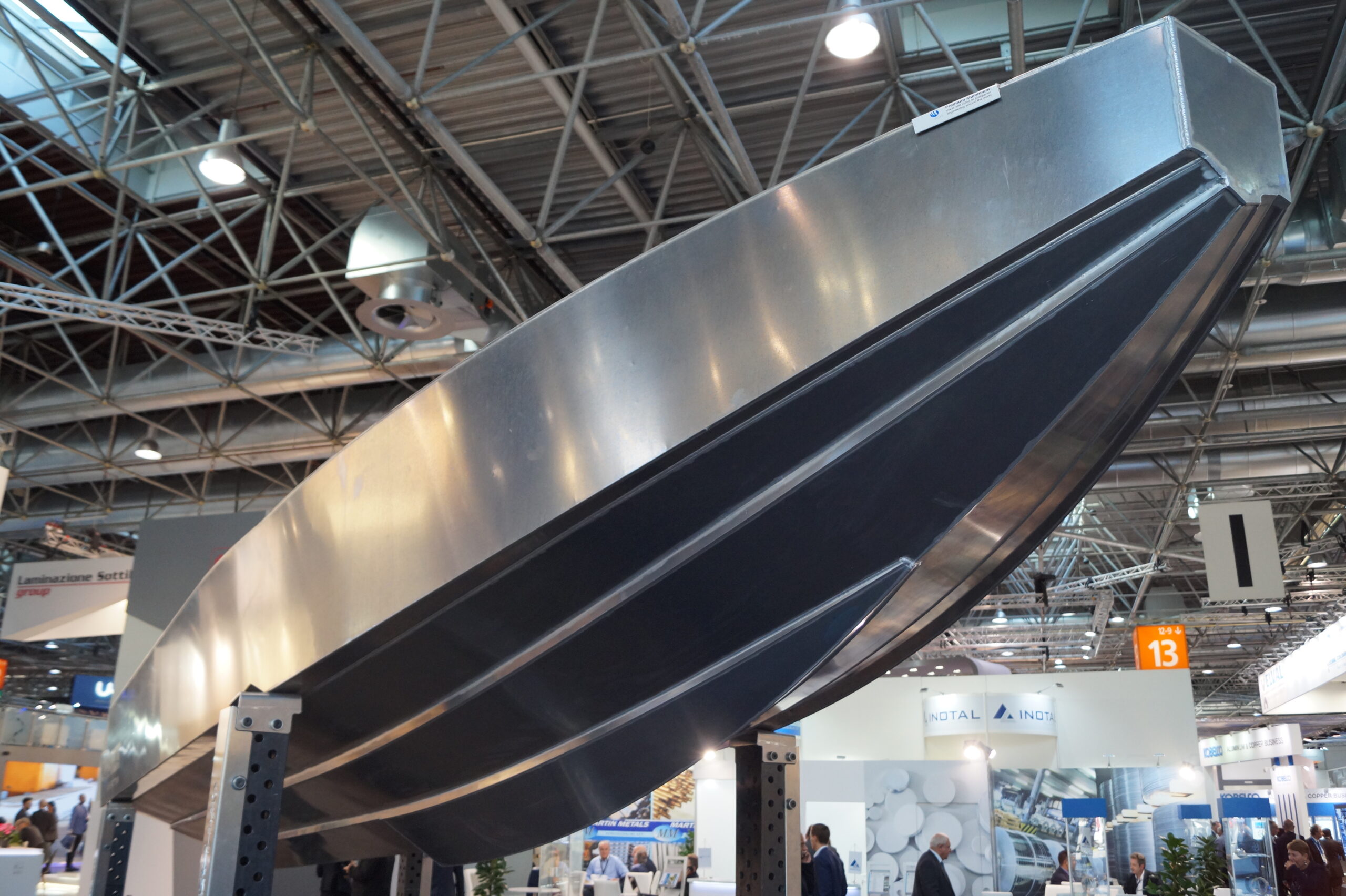
Aluminium boat hull. Photo credit: NearEMPTiness
Aluminium behaves in a very predictable way under impact—it bends or dents instead of suddenly breaking, which is a big advantage in certain products. And while it depends on the application, it’s usually more affordable, which can be a deciding factor in many projects.
Where do they compete?
There are plenty of industries where both materials are solid options, but here are three common examples. They show pretty clearly that materials are just one part of the equation in engineering—choosing the right one depends on a lot of specific factors.
Aviation
Metals have traditionally been the go-to materials for aircraft manufacturing, especially aluminium. However, composites are becoming more popular thanks to the efficiency gains they offer and advantages like improved fatigue resistance in certain cases.

Carbon fiber light aircraft fuselage. Photo credit: Matti Blume
Bicycles
Carbon fiber bikes have been around for years and dominate the high-performance segment, but aluminium is still very popular among many riders. Generally speaking, carbon bikes are lighter, while aluminium ones tend to handle crashes and rough use better.
Wheels
Most bikes, motorcycles, and cars use aluminium alloy wheels, although high-performance models increasingly use carbon fiber wheels or offer them as an option. Aluminium wheels offer a great balance of strength, cost, and weight, while carbon fiber wheels deliver top performance with the lowest possible weight.
When should hybrid carbon fiber and aluminium parts be used?
A growing engineering approach is to use hybrid structures combining carbon fiber and aluminium to take advantage of both materials. For example, using carbon fiber outer layers attached to aluminium frameworks, or aluminium structures reinforced with CFRP, or directly joining a carbon fiber structure to an aluminium one. This allows engineers to benefit from lightweight stiffness along with the ductility and energy absorption of metal.
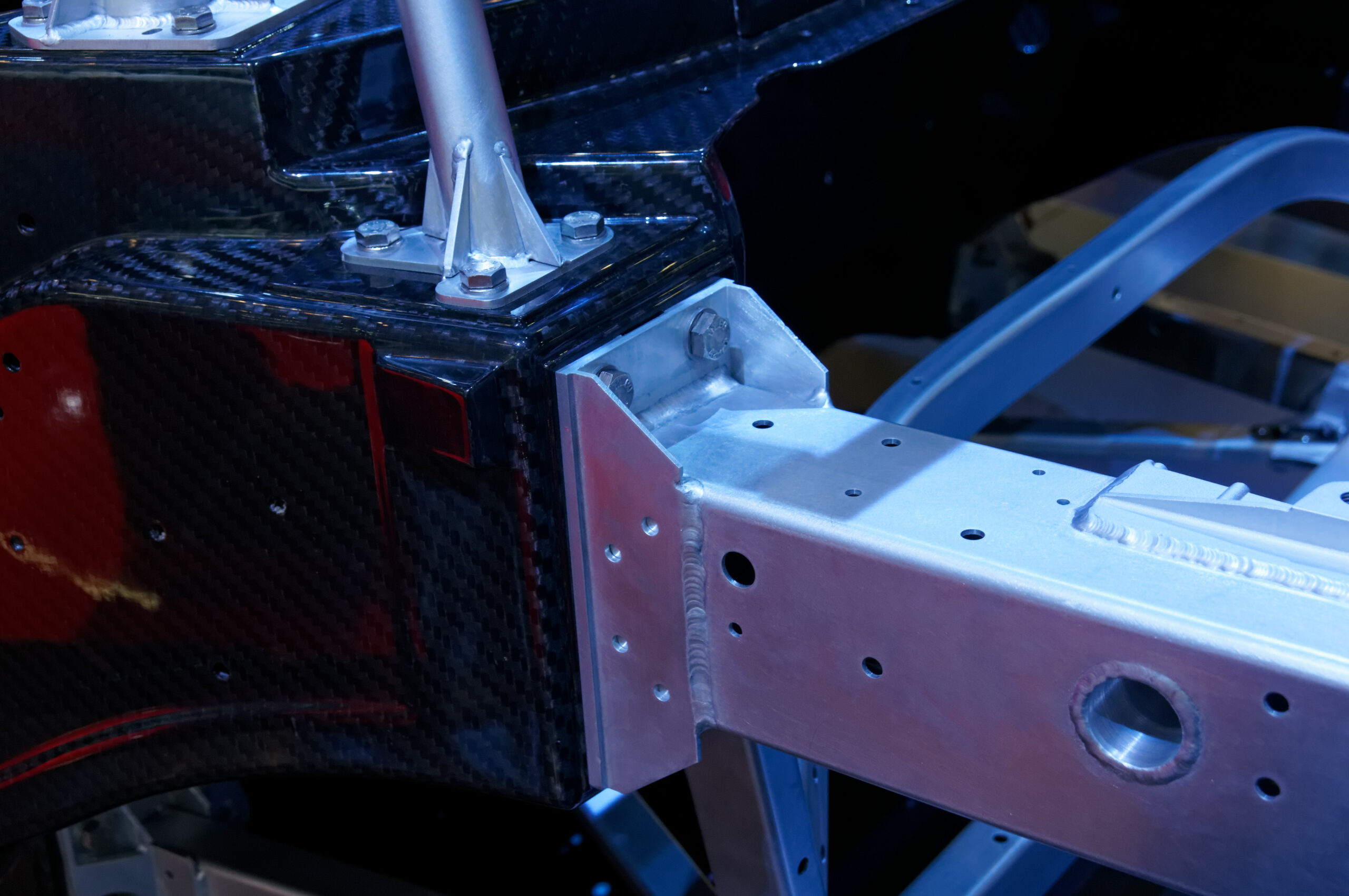
Alfa Romeo 4 C combination of carbon fiber and aluminium. Photo credit: youkeys
However, these combinations need careful design, since it’s usually necessary to avoid direct contact between the two materials to prevent galvanic corrosion in aluminium. Another important factor is thermal expansion—aluminium expands much more with temperature than carbon fiber, so the design has to accommodate that difference.
TL:DR
Aluminium is more ductile, isotropic, usually more affordable, and better suited for large-scale production. Carbon fiber is stiffer, lighter, anisotropic, and enables designs that aren’t possible with metal.
Depending on the project, one will be a better fit than the other. In some cases, the best solution is actually a hybrid design that combines both materials.