

Composite materials are typically used in high-performance applications, which often makes people assume they’re more expensive than other alternatives. But that’s not always the case. In some situations, they can actually be the most cost-effective option depending on the project.
When composites are cheaper upfront
Every project needs its own cost analysis, taking into account its specific requirements. That said, composites can sometimes be more affordable than metals when manufacturing certain parts.
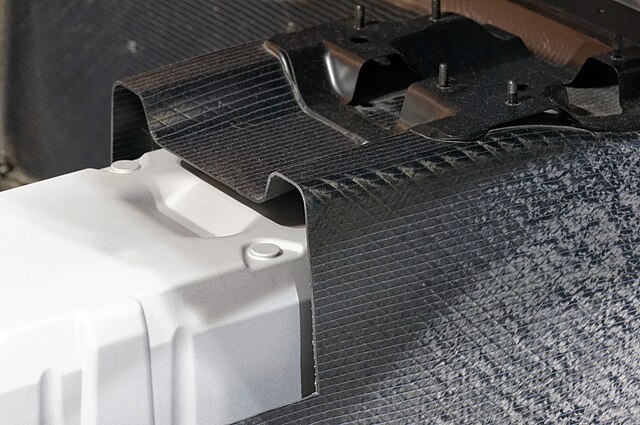
In many cases, the cost of a component is driven more by design complexity and manufacturing processes than by raw material price. This is where composites can offer a clear advantage.
Why? Because composites are made differently. Their manufacturing processes allow for simpler designs in many cases, reducing the need for additional steps. For example, a carbon fiber part can end up being more cost-effective than its metal counterpart if the latter requires extra labor such as welding, machining, or other post-processing.
One of the key advantages of composites is part consolidation—the ability to integrate multiple components into a single part, reducing assembly time, fasteners, and potential points of failure.
It’s also worth noting that not all composites are created equal. Carbon fiber with epoxy resin is usually on the higher end in terms of cost, but there are many other fiber types and material combinations that offer lower costs while delivering increasingly competitive mechanical performance.
Other ways composites become cost-effective
Even when a composite part has a higher upfront cost than a metal alternative, it can still be the more cost-effective choice overall. Lightweight components, for instance, can reduce the need for additional structural reinforcements. In other cases, composites eliminate the need for corrosion protection, which can significantly increase total system costs.
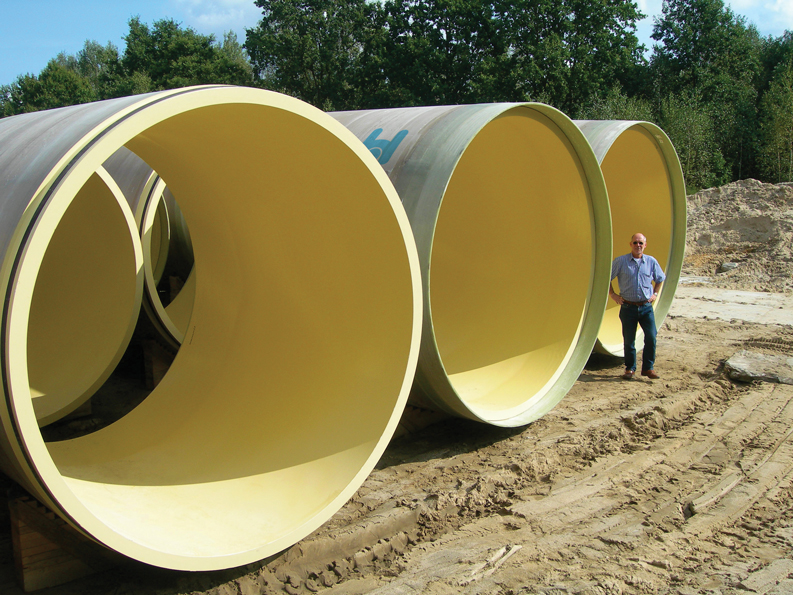
Big FRP pipes. HOBAS CC BY-SA 3.0
A good example is fiber reinforced plastic (FRP) pipes. These pipes are strong and lightweight, which reduces transportation and installation costs. They are also highly resistant to corrosion and abrasion, which is why they are widely used for transporting corrosive liquids, aggressive chemicals, fluids, and gases.
FRP pipes typically use reinforcement fibers such as glass, ensuring long-lasting performance that often exceeds 50 years. They are suitable for underground applications, and their low coefficient of thermal expansion makes them a very good option when exposed to temperature fluctuations above ground.
There are also performance-related advantages. While every composite is different, they generally offer better fatigue resistance than most conventional metals. This can translate into fewer inspections, less maintenance downtime, higher availability, and a reduced need for spare parts.
.
Cost-effectiveness over the full product lifecycle
In many cases, the real value of composites becomes clear over the product’s lifecycle. A common mistake is to evaluate materials based only on upfront cost, without considering operational and maintenance savings over time. This is where lifecycle analysis comes into play, as it looks beyond the initial purchase cost.

Closeup of a Boeing 787
As we highlighted in our previous article on why carbon fiber is more expensive than other materials, transportation is one of the clearest examples.
In the latest generation of commercial aircraft, such as the Boeing 787 and the Airbus A350, the primary structure is made from carbon fiber reinforced plastic (CFRP), making them lighter and more fuel-efficient. These aircraft consume approximately 20% to 25% less fuel than previous equivalent models, although this also includes improvements from new engines and other innovations.
While composites can increase manufacturing costs, in aviation they can enable components that are 20% to 50% lighter than their metal equivalents. This leads to a significant reduction in fuel consumption, as heavier aircraft require more lift, which in turn generates more drag. This is especially relevant for long-haul flights, where large amounts of fuel—and therefore weight—must be carried.
When you look at the full lifecycle, composites often prove to be highly cost-effective—not just economically, but also from a sustainability standpoint. Their lower weight reduces fuel consumption, making them more efficient to operate and lowering CO₂ emissions. In addition, their superior fatigue resistance is one of the reasons why the use of composites in aviation continues to grow.
Continuous innovation is pushing composites further
Metal manufacturing is a highly mature field, shaped by decades of widespread use. Composites, on the other hand, are relatively new in industrial terms and continue to grow rapidly.
This means a lot of ongoing innovation. Research and development in composites is intense, and new breakthroughs are happening all the time. Each innovation unlocks solutions that weren’t possible just a few years ago. New materials, new combinations, new processes—you name it. All of this is expanding the range of applications where composites are not just viable, but the most cost-effective option available.
And that list keeps growing.